
Test Automation Platform: Double Your Testing Speed While Cutting Costs in Half
As enterprises embark on cloud migration and application modernization journeys, testing becomes a critical bottleneck. Traditional manual testing processes slow down release cycles and introduce quality risks during transformation initiatives.
A test automation platform serves as a cornerstone of modern DevOps transformation, enabling organizations to maintain quality standards while accelerating deployment timelines. This guide explores how enterprises implement test automation platforms as part of broader digital transformation initiatives.
What Are Test Automation Platform Benefits?
Organizations implementing digital transformation recognize test automation platform benefits as fundamental to success.
Key advantages include:
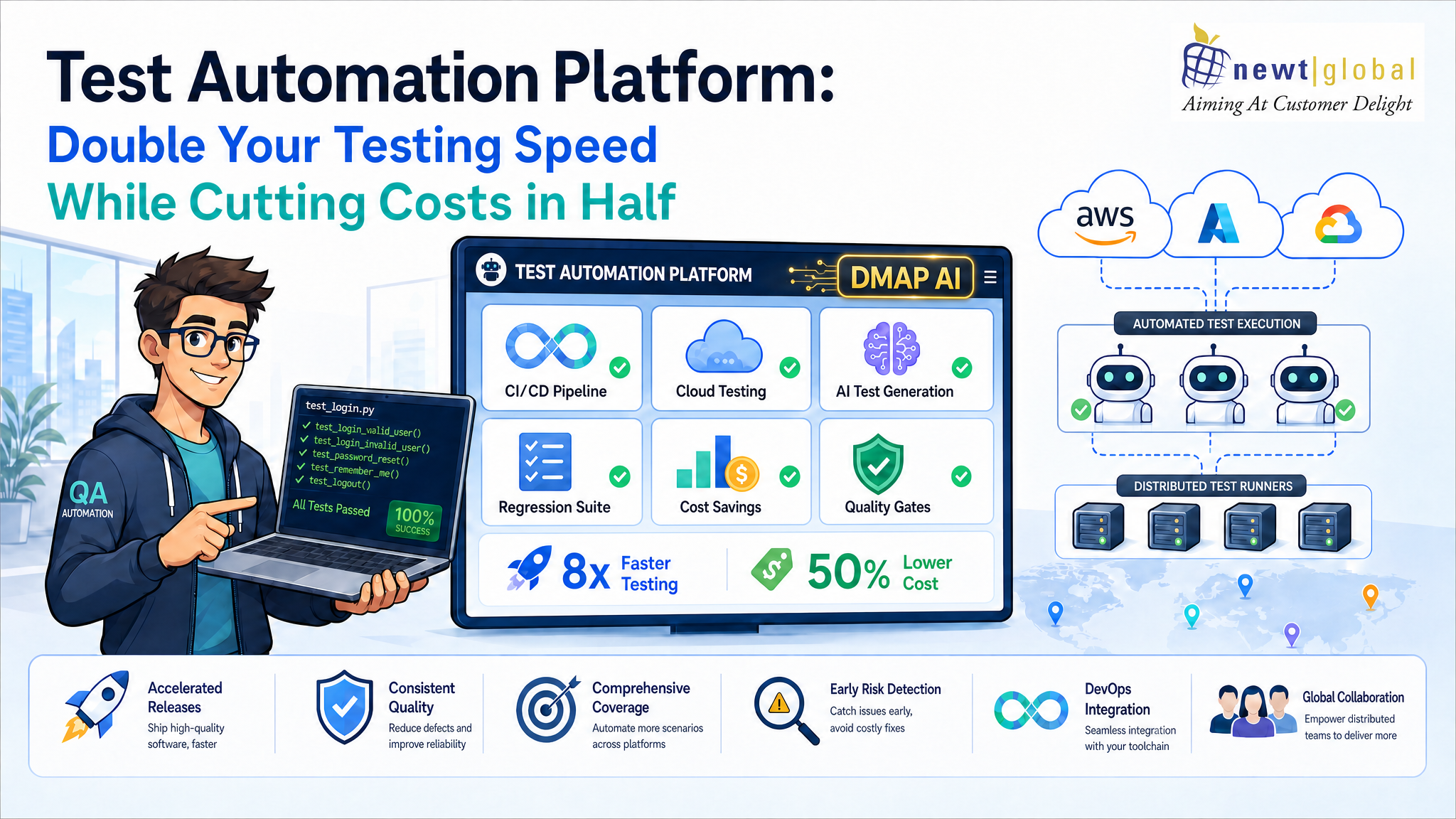
- Accelerated Release Cycles: Automated testing reduces feedback loops and enables faster iteration, supporting continuous integration and deployment practices essential to cloud-native operations
- Consistent Quality Standards: Automated tests execute uniformly across environments, ensuring reliable results before production deployment
- Comprehensive Coverage: Automation extends test scope beyond manual teams, validating application behavior across cloud platforms and architectural changes
- Operational Efficiency: QA teams transition from repetitive execution to strategic quality initiatives and defect analysis that require human expertise
- Early Risk Detection: Automated testing integrates into development pipelines, catching issues before they impact production systems
- DevOps Integration: Automation enables testing at every stage of the delivery pipeline, supporting infrastructure-as-code validation and continuous quality assurance
These test automation platform benefits directly impact how enterprises deliver software reliably while maintaining competitive release timelines during transformation projects.
How Does Cloud-based Test Automation Improve Efficiency?
Cloud-based test automation eliminates on-premise infrastructure constraints and simplifies testing operations. Organizations increasingly adopt cloud-based testing to support distributed teams and dynamic workload demands.
Scalability for Enterprise Workloads
Cloud-based test automation provides elastic testing capacity that scales with demand. During critical validation phases—such as pre-migration testing or post-modernization quality assurance—teams can rapidly provision additional testing resources without infrastructure investment.
Global Team Collaboration
Cloud-based solutions enable geographically distributed QA teams to access unified testing environments and shared test repositories. This collaboration model ensures consistent testing practices across regional offices and supports 24/7 testing operations.
Test automation platform efficiency improves through infrastructure abstraction
The efficiency gains from cloud-based testing come from reduced infrastructure management overhead. Teams focus on testing strategy rather than server maintenance, translating to faster test execution and quicker feedback cycles critical to modern DevOps operations.
What Is Enterprise Test Automation Platform Setup?
Enterprise test automation platform implementations require comprehensive planning to address the complex needs of large organizations managing multiple applications and distributed teams.
Architecture and Integration Considerations
Enterprise environments demand testing infrastructure that integrates seamlessly with development tools, CI/CD pipelines, cloud platforms (AWS, Azure, GCP), and project management systems. A properly configured test automation platform creates a unified quality ecosystem supporting deployment decisions.
Test Automation Framework Setup for Scalability
The foundation of successful enterprise implementation relies on establishing solid test automation framework setup:
- Modular test design patterns supporting reusability
- Platform-independent execution models enabling cross-cloud testing
- Distributed test execution capabilities for parallel processing
- Integration with data management systems for dynamic test scenarios
- Automated regression selection based on code impact analysis
Multi-Team Governance
Enterprise implementations must support multiple teams while maintaining consistent quality standards. The platform provides governance capabilities ensuring alignment with enterprise architecture, security, and compliance standards.
How Can Generative AI Test Automation Transform Your Testing?
Generative AI test automation represents emerging capabilities reshaping how enterprises approach testing. Modern test automation platforms increasingly incorporate AI features that enhance testing effectiveness.
AI-Assisted Test Case Generation
Machine learning algorithms analyze application requirements to automatically generate test cases. This capability accelerates test creation and ensures comprehensive scenario coverage.
Intelligent Test Maintenance
AI-powered systems identify when tests fail due to legitimate application changes versus actual defects. This intelligence reduces false test failures, helping teams focus on genuine quality issues.
Predictive Testing Insights
Machine learning analyzes testing data and development patterns to identify high-risk areas. These predictive capabilities help teams allocate testing resources strategically toward areas with the highest business impact.
Getting Started: Test Automation Platform Onboarding
Successfully establishing test automation requires strategic planning and phased execution.
Initial Implementation Steps
- Assessment and Planning: Evaluate existing testing processes and identify high-impact test scenarios for automation
- Tool and Platform Selection: Evaluate platforms based on technology compatibility, team expertise, and support for your cloud deployment targets (AWS, Azure, GCP)
- Framework and Environment Setup: Establish modular test design standards and configure testing environments across cloud platforms
- Team Enablement: Provide comprehensive training helps teams transition from manual testing to automation engineering
Test automation platform onboarding timeline
Successful implementation typically unfolds over extended phases. Initial framework and pilot automation may begin within early weeks, while comprehensive testing coverage and optimization continue over multiple quarters.
Cost Savings Test Automation Platform: How Does It Work?
Test automation platform benefits extend to significant operational and financial considerations:
- Reduced Manual Testing Labor: Automation handles repetitive execution, allowing QA staff to focus on test design and complex scenarios
- Faster Defect Prevention: Improved testing catches issues during development stages rather than after production release
- Accelerated Time-to-Market: Faster testing cycles enable quicker release schedules, supporting competitive response during digital transformation
- Infrastructure Cost Reduction: Cloud-based automation eliminates expensive on-premise testing infrastructure
- Improved Resource Utilization: Teams accomplish more comprehensive testing with existing resources through improved processes
How Does Test Automation Support Your DevOps Transformation?
Modern enterprises view test automation as essential infrastructure for DevOps transformation. Automation enables the continuous integration and deployment practices that drive competitive advantage.
- Your organization should consider automation if you:
- Are implementing continuous integration practices needs automated quality gates in deployment pipelines
- Maintain multiple product versions requiring comprehensive regression testing
- Deploy applications across multiple cloud platforms requires cross-platform validation
- Experience quality issues that slow release cycles
- Operate distributed teams requiring consistent testing practices
Conclusion
Test automation platforms have become essential infrastructure for enterprises undertaking digital transformation, cloud migration, and DevOps modernization. By automating repetitive testing tasks and enabling faster feedback cycles, these platforms help organizations deliver reliable software while accelerating time-to-market.
Begin by evaluating your current testing challenges within the context of your digital transformation roadmap. Identify where automation delivers value aligned with your business objectives. With strategic test automation platform implementation, you’ll establish the quality engineering capabilities essential to competitive success in today’s technology landscape.